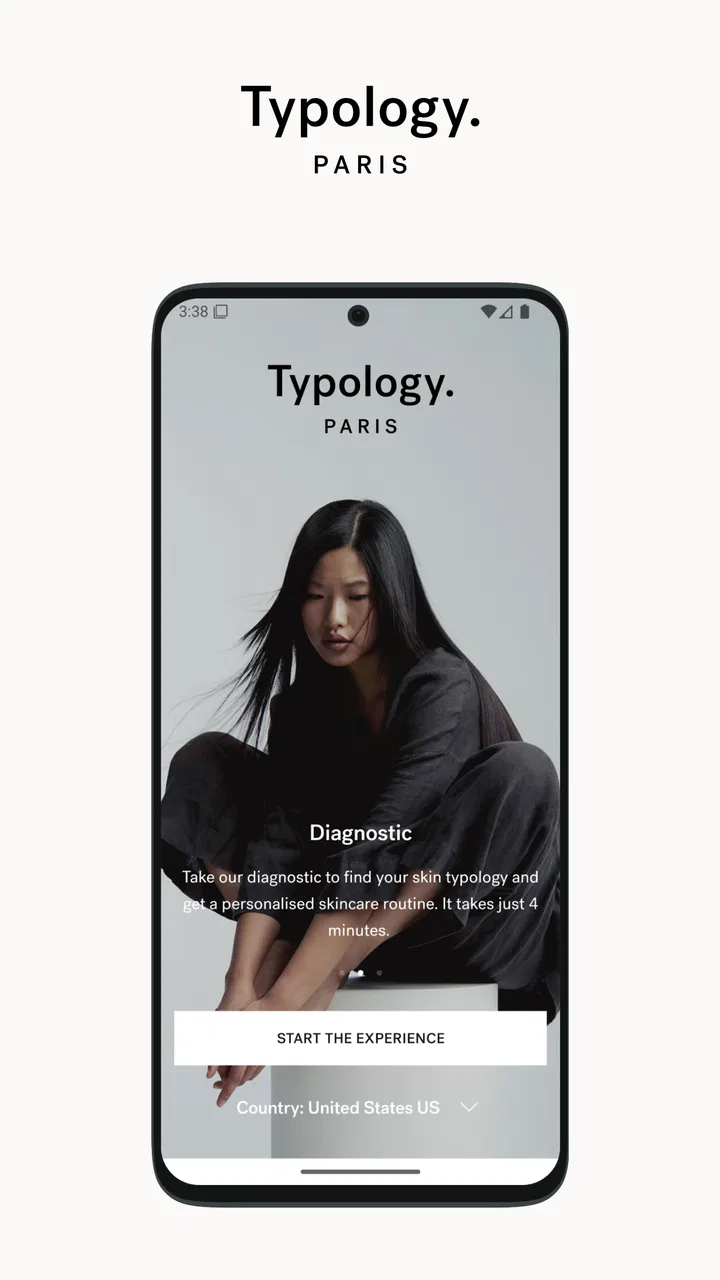
Typology Paris - Skincare
- 4.8
- Rating
- 100.00K
- Installs
- Free
- Price

 Analysis by App-foxy
I approached Typology Paris as a practical skincare companion rather than another shopping app. Its central promise is simple: help me understand my skin and make more informed choices around a Typology routine. That focus matters because skincare can quickly become confusing when every product seems to target several concerns at once. In my experience, the app is most useful when I want a clearer starting point, not when I am looking for an enormous catalogue or a replacement for professional dermatological advice.
Developed by Typology developer, this free beauty app is aimed at people who want to become more confident about their skincare decisions. It is available for everyone, runs on Android 7.0 and newer, and the current version is 1.3.1. The app was released on January 27, 2026, and its presence is already visible through over 100 thousand installs and a 5.0 average from around 3 thousand ratings. Those figures suggest that it has found an audience, although I still think its value depends heavily on whether you actually want a guided Typology experience.
Understanding the app’s main capability
I find this section most useful for setting expectations: the app’s main role is to help connect a skincare concern with a more considered routine, rather than to serve as a general beauty marketplace. I would keep that distinction in mind before exploring it, since it explains both why the guidance can feel focused and why another source may be better for broader comparisons. A clear purpose makes it easier to judge whether the app fits your needs.
You May Also Like

 Blood Strike: 2.5 Anniversary
Blood Strike’s Loadouts Turn Every Drop Into a Tactical Gamble
A close look at Blood Strike’s custom loadouts: how fast access to signature weapons reshapes its battle royale rhythm, rewards preparation, and narrows the gap between fights.

 Pandora - Music & Podcasts
Pandora’s Music Is Easy to Start, but Harder to Recover
Pandora’s strength is its low-effort path from a seed to a station. Its weak spot is how much confidence it asks you to place in connection, setup, and quiet recovery.

 8 Ball Pool
 Is Built on Rivalries, Rematches, and Routine
A close look at the rivalries, rematches, shared routines, and unanswered safety questions that turn a quick pool match into a persistent mobile community.

 Samsung Music
’s Quiet Strength Is Playing What You Already Own
Its reach comes less from spectacle than from dependable access to a personal library. That simplicity is both the app’s strongest retention engine and its ceiling.

 AccuWeather: Weather Radar
AccuWeather Review: A Quick, Clear Forecast for Everyday Decisions
For everyday plans, the best forecast is the one you can understand quickly. AccuWeather makes rain timing, radar, and local conditions easy to act on, with a few trade-offs.

 Hill Climb Racing
Why Hill Climb Racing Still Turns Crashes Into One More Run
A tiny car, a bumpy hill and one more upgrade: Hill Climb Racing keeps resurfacing because its simple chaos makes every near-miss feel personal.
More From Our News Desk



A guided way to think about your skin
The most important capability here is the attempt to turn skincare from guesswork into a more personal learning process. Instead of treating the app as a simple shelf of products, I found it more helpful to use it as a reference point for identifying what I want to improve, understanding why a product might fit that goal, and building a routine without adding unnecessary steps.
That distinction is important. Many beauty apps are primarily designed around browsing, promotions, or visual inspiration. Typology Paris - Skincare feels more focused on connecting the user with the brand’s approach to ingredients and routines. The practical effect is that I spend less time asking, “Which product looks popular?” and more time asking, “What is my actual concern, and what kind of routine can I follow consistently?”
The strongest benefit is decision clarity, not endless choice. If you are new to skincare, this can make the first few decisions feel less intimidating. If you already know exactly which ingredients and products work for you, the benefit is smaller, because you may prefer a general skincare journal, a dermatologist’s guidance, or a retailer with a wider range of brands.
Why this matters for a real routine
A routine only works if it is understandable enough to repeat. I have found that people often abandon skincare not because they dislike the products, but because they introduce too many changes at once or cannot tell what each step is supposed to do. A brand-focused app can help narrow the conversation to a more manageable set of choices.
The trade-off is equally clear: the guidance is naturally tied to Typology’s own product world. That makes the experience coherent, but it also means the app should not be treated as a neutral comparison tool across the entire beauty market. Its recommendations are most useful when you are already considering Typology or want to learn how the brand organizes skincare concerns.
How I would use it in practice
In practice, I would approach the app with one question ready, such as what role a product might play in a routine I already follow. That keeps browsing purposeful and helps me avoid treating every suggestion as something I need to buy. The following section turns that approach into a realistic routine-building workflow, including how to make room for personal observations rather than relying on a recommendation alone.
Start with one concern, not a complete makeover
My first practical tip is to begin with one skin concern rather than trying to redesign everything at once. For example, if my main issue is dryness, I would use the app to understand a routine around hydration before adding products aimed at texture, blemishes, tone, and sensitivity. This gives me a clearer way to judge whether the routine feels comfortable and sustainable.
That approach also reduces a common skincare mistake: changing several products together and then having no idea which one helped or caused irritation. The app becomes more valuable when I use it as a planning aid instead of a reason to collect every suggested step. I would make a short note of the concern I am addressing, the products I am considering, and how my skin feels over time.
Use the explanations before making a purchase
A less obvious strength is the opportunity to pause and learn before buying. When a product is presented as part of a routine, I would look at its intended role and ask whether it solves a problem I actually have. This sounds basic, but it prevents the familiar habit of buying an active ingredient simply because it is popular.
I would also compare the suggested routine with what I already own. If I have a cleanser and moisturizer that suit me, there is no reason to replace them automatically. The app is better used to fill a genuine gap than to encourage a complete reset. This is especially helpful for someone with sensitive skin, because fewer simultaneous changes make it easier to notice discomfort early.
Keep the app beside, not above, your own observations
The app can organize information, but it cannot feel tightness, stinging, flaking, or unexpected sensitivity on my behalf. I would treat its guidance as a starting framework and then pay attention to how my skin responds. A routine that looks logical on screen may still be unsuitable in a particular season, after travel, or when the skin barrier is already stressed.
For that reason, I would avoid using a guided recommendation as permission to introduce several strong products at the same time. A slower workflow is more useful: choose a manageable routine, introduce changes carefully, and give myself enough time to decide whether the experience is positive. When irritation is persistent or severe, I would stop experimenting and seek professional advice rather than asking a beauty app to diagnose the problem.
What the everyday experience is best at
In daily use, I see the app working best as a bridge between curiosity and action. Someone may know that their skin feels dry or looks uneven but not know how to translate that observation into a routine. The app’s value lies in helping that person ask better questions and connect those questions to Typology’s products and skincare language.
It is less convincing as a full personal record of every factor that affects skin. Sleep, weather, stress, medication, shaving, makeup, and hormonal changes can all influence how skin behaves, and a brand app cannot replace that broader context. I would still keep simple personal notes if I were trying to understand recurring reactions or changes.
The best everyday scenario for Typology Paris
The everyday example here shows where a focused skincare guide can be especially helpful: when someone has noticed a concern but does not yet know how to make a sensible first move. I would use that moment to slow down, narrow the goal, and consider a modest change instead of chasing several results at once. That makes the app’s practical value easier to see while keeping expectations grounded.
A beginner building a calm morning and evening routine
Imagine a person who has recently noticed dryness and occasional roughness after washing their face. They do not want a complicated ten-step routine, and they are unsure whether they need an exfoliant, a serum, or simply better basic care. This is the situation where I would recommend trying the app.
I would begin by identifying dryness as the main concern, then examine the suggested product roles rather than immediately adding everything. A simple routine could be considered first, with attention to how the skin feels after cleansing and throughout the day. If the app introduces ingredients or products that sound unfamiliar, I would use the explanations to understand their purpose instead of relying on a product name alone.
After choosing a small number of changes, I would keep the routine consistent and observe the result. The useful insight here is that the app can help prevent overcorrection. Dry skin often tempts people to layer multiple rich products, while roughness can tempt them to exfoliate aggressively. A guided, brand-specific structure may encourage a more measured approach.
Preparing for a targeted shopping decision
Another realistic scenario is preparing to buy one product rather than browsing without a plan. Before opening a store, I would use the app to define what I want the product to do and what role it should play. That makes it easier to reject attractive but unnecessary options.
This workflow is particularly useful when I am shopping for someone else. Instead of guessing based on packaging or vague claims, I can think through the person’s routine, comfort level, and main concern. I would still avoid choosing active skincare as a surprise gift for someone with known sensitivity, but the app can make a general conversation about skincare less awkward and more concrete.
When the scenario does not fit
I would not choose this app as my main tool if I want detailed comparisons between unrelated brands, ingredient-level research across the market, or a medical assessment of acne, rosacea, eczema, or other persistent conditions. In those cases, a dermatologist, pharmacist, or broader ingredient reference may be a better option.
I would also skip it if I already have a stable routine and no interest in Typology products. The app’s focused identity is an advantage for a brand-curious user, but it becomes a limitation for someone who wants complete independence from any single skincare range.
Trade-offs that affect the decision
A useful decision depends not just on what the app helps with, but on where its focus becomes a constraint. I would weigh the convenience of a brand-centered path against the need for independent comparisons, medical guidance, or a record of broader influences on skin. The next section draws out those trade-offs so readers can decide whether the convenience is worth the narrower scope.
The focused catalogue is both helpful and restrictive
The clearest trade-off is focus. Because the experience is centered on Typology, the advice can feel easier to follow than a giant marketplace filled with competing formulas. I do not have to compare an overwhelming number of brands before understanding the basic purpose of a product.
At the same time, I cannot use that focus to answer every skincare question. If I want to know whether a Typology option is better than a product from another brand, I need another source for the comparison. The app can help me understand Typology’s approach, but it should not be mistaken for an independent review platform.
Education is useful, but it does not guarantee results
I appreciate the educational angle because skincare terminology can be difficult for beginners. Still, learning what a product is intended to do is not the same as knowing how my skin will react. Two people with the same broad concern may have very different tolerances and routines.
That means I would be cautious about treating a polished recommendation as a promise. The app can improve the quality of my decision, but it cannot guarantee that a product will suit me. Patch testing, gradual introduction, and attention to discomfort remain important habits, especially when adding unfamiliar ingredients.
Free access lowers the barrier, but time still matters
The app costs nothing to download, which makes it easy to explore without committing financially at the start. That is a genuine advantage for someone who wants to understand the brand before deciding whether its products belong in a routine.
However, free access does not remove the need for patience. The useful part of the experience comes from thinking through concerns and building a routine carefully, not from rushing through recommendations. If I only want to purchase a familiar product quickly, visiting a normal store page may be faster.
Platform expectations
Support for Android 7.0 and newer makes the app accessible to people who are not using a recent phone. I would still judge the experience on my own device rather than assuming that every phone will feel identical. For a skincare app, smooth navigation matters less than the clarity of the guidance, but awkward browsing can still discourage careful comparison.
The age classification of Everyone also fits the app’s general beauty and skincare purpose. That does not mean every recommendation is appropriate for every individual. Younger users, people with diagnosed skin conditions, and anyone taking medication that affects the skin should still involve a parent, pharmacist, or clinician when necessary.
Who gains the most from this app
I see the strongest fit for people who are beginning to build a routine, already use Typology, or want a calmer way to explore the brand’s approach. The same focus may feel unnecessary to someone with a settled routine or a need for clinical advice. The next section helps distinguish those audiences and makes the recommendation more useful than a simple yes or no.
People new to skincare
Beginners are the clearest audience. If I were starting from scratch, I would value a structured way to connect a concern with a routine instead of searching randomly through social media. The app can make the first step feel less mysterious and help me avoid buying products without understanding their role.
It is also useful for someone who has tried many products but never developed a consistent system. In that case, the app’s focused approach may encourage a simpler routine with more deliberate choices. The key is to use it as a guide for consistency, not as an excuse to keep changing products.
Existing Typology customers
People who already use Typology products may gain the most practical value because the app can put familiar items into a broader skincare context. It can help them think about what to use, why they are using it, and whether a new purchase addresses a real need.
This is where the app feels more distinctive than a generic beauty tracker. A general tracker may record habits, while this experience is built around understanding a particular skincare philosophy and product ecosystem. If that ecosystem already suits me, the focused guidance feels relevant rather than restrictive.
Curious shoppers who want less noise
I would also recommend it to shoppers who dislike the pressure of crowded beauty marketplaces. The app offers a narrower path, which can be refreshing when too many choices make every purchase feel uncertain. It is especially appealing to someone who prefers a considered routine over constant experimentation.
Who should look elsewhere
People seeking clinical diagnosis, emergency advice, or treatment for a persistent condition should not rely on this app as their primary resource. Someone who wants a cross-brand ingredient database may also prefer a broader skincare reference. Likewise, experienced users with a carefully tested routine may find that the app adds little unless they are specifically interested in Typology.
My overall view is positive, but it is deliberately qualified. Typology Paris - Skincare is most successful when I use its central capability to reduce confusion and build a focused routine around a genuine concern. It is not a universal skincare authority, and its brand-centered structure will not suit everyone. For a beginner, a curious Typology customer, or anyone tired of random product choices, it is a worthwhile free app to explore. For medical questions or independent market-wide comparisons, I would pair it with a more appropriate source rather than expecting one beauty app to do everything.
FAQs for Typology Paris - Skincare
01What is Typology Paris - Skincare, and what does it offer?
Typology Paris - Skincare is a comprehensive app designed to help users enhance their skincare routines. It offers personalized product recommendations based on individual skin types and concerns. The app also provides detailed information about each product's ingredients, benefits, and usage instructions, making it easier for users to make informed decisions about their skincare regimen.
02How does the app customize skincare routines for different users?
The app customizes skincare routines by first having users complete a detailed skin assessment questionnaire. This assessment gathers information about skin type, concerns, and goals. Based on the results, the app generates personalized product recommendations and routine guidelines. It continuously updates suggestions as users log their skincare progress and responses to products, ensuring a tailored experience.
03Is Typology Paris - Skincare free to use, or are there in-app purchases?
Typology Paris - Skincare is free to download and use. However, it may offer in-app purchases for premium features or access to exclusive content. These purchases could include advanced skincare insights, priority customer support, or early access to new product launches. Users can enjoy the core functionalities without any cost, making it accessible to a wide audience.
04What types of skincare products are included in the app’s recommendations?
The app includes a wide range of skincare products, from cleansers and toners to serums, moisturizers, and sunscreens. It focuses on high-quality, ingredient-conscious brands, ensuring users receive effective and safe product suggestions. The app also highlights products suitable for various skin concerns, such as acne, aging, and sensitivity, catering to diverse skincare needs.
05Can users track their skincare progress within the app?
Yes, users can track their skincare progress within Typology Paris - Skincare. The app features a dedicated section for logging daily skincare activities, product usage, and skin condition updates. It provides insights and visualizations of users’ progress over time, helping them understand the effectiveness of their routines and make necessary adjustments to achieve their desired results.
Pros
- User-friendly interface for easy navigation.
- Comprehensive skincare product catalog.
- Personalized recommendations based on skin type.
- Secure and easy in-app purchases.
- Access to expert skincare tips and advice.
Cons
- Limited availability of some products.
- Requires internet connection for full functionality.
- No offline access to skincare guides.
- Occasional loading delays on older devices.
- Lacks a community forum for user discussions.

Typology Paris - Skincare
Gallery